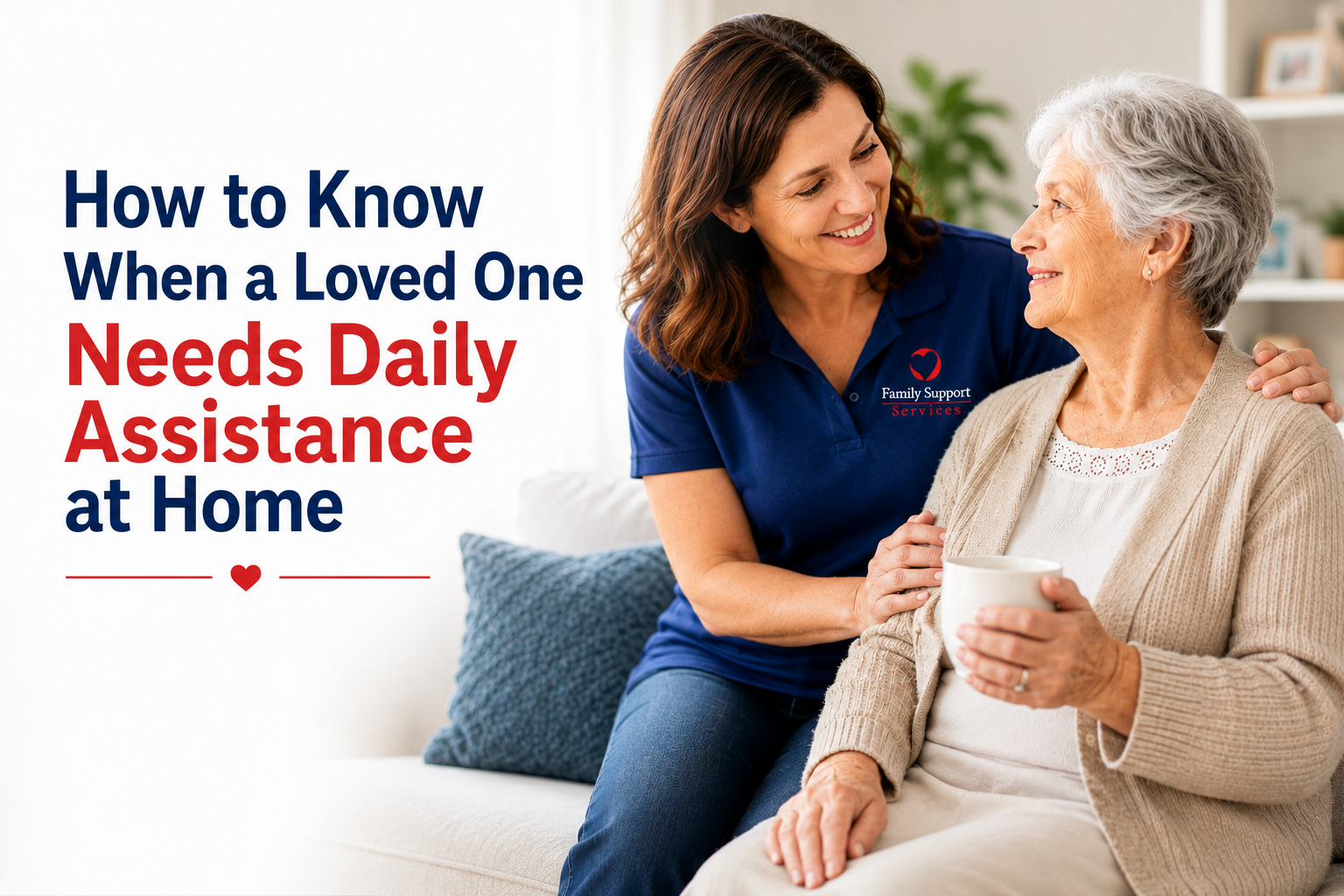

When a loved one needs extra support to continue living safely at home, families often ask: what support is available for family caregivers?
Many assume caregiving must be unpaid and unsupported. However, several Medicaid-funded programs allow family members to provide care at home, while receiving structured guidance and tax-free compensation.
At Family Support Services (FSS), we focus on programs that empower families to provide meaningful, daily care while coordinating with medical providers when clinical services are required.
What Is Home Care?
Home care focuses on non-medical, day-to-day support that helps individuals remain comfortable and independent in their own homes. These services are especially valuable for seniors and adults with disabilities who need help with daily routines but do not require ongoing medical treatment.
Home care typically includes:
- Assistance with activities of daily living (ADLs) such as bathing, dressing, and mobility
- Meal preparation and light housekeeping
- Medication reminders (non-clinical)
- Companionship and emotional support
- 24-hour supervision when needed
At FSS, our programs are built around supporting family caregivers, recognizing that loved ones often provide the most consistent and compassionate care.
What Is Home Health?
Home health provides clinical and medical services prescribed by a physician and delivered by licensed professionals. These services are typically short-term and focused on recovery or stabilization.
Home health services may include:
- Skilled nursing care
- Physical, occupational, or speech therapy
- Wound care
- Health monitoring and medical assessments
Home health works best as a complement to home care rather than a replacement. Many families benefit from combining both services to ensure complete support.
How FSS Answers the Question: What Support Is Available for Family Caregivers?
FSS provides state-specific Medicaid programs that allow family members to become structured caregivers while receiving tax-free compensation. Below is how support works in each state we serve.
Support for Family Caregivers in Indiana
Indiana offers the Medicaid Structured Family Caregiving (SFC) Program.
This program allows eligible individuals to receive care from a family member who lives in the same home.
Key Program Benefits:
- Tax-free compensation for caregivers
- 24-hour supervision and non-medical support
- Care provided in a shared home setting
Client Eligibility:
- Indiana resident
- 65+ under the PathWays Waiver, or 18–64 under the H&W or TBI Waiver
- Requires assistance with at least two ADLs
Caregiver Requirements:
- Must be 18+
- Must live in the same home
- May be a relative, friend, spouse, or legal guardian
The Value: Indiana’s program transforms unpaid caregiving into structured, financially supported care.
Support for Family Caregivers in Missouri
Missouri provides support through the Structured Family Caregiving Waiver (SFCW), specifically designed for individuals diagnosed with Alzheimer’s or related dementia.
Key Program Benefits:
- Tax-free caregiver compensation
- 24-hour supervision
- Assistance with at least one ADL
- Spouses may be compensated caregivers
Client Eligibility:
- Missouri resident
- 21+ with Alzheimer’s or related dementia
Caregiver Requirements:
- Must be 18+
- May be a relative, friend, or spouse
The Value: Missouri recognizes the intensity of dementia care and provides meaningful relief to families managing these challenges at home.
Support for Family Caregivers in Ohio
Ohio offers support through the Structured Family Caregiving (SFC) Program.
Key Program Benefits:
- Tax-free compensation
- Nursing home level of care provided in the home
- Physician-approved care plan
- Professional oversight
Client Eligibility:
- Age 60+
- Eligible under PASSPORT Medicaid guidelines
- Requires nursing home level of care
- Lives in a private residence with the caregiver
Caregiver Requirements:
- Must be 18+ and live with the client
- May be a relative or friend
- Spouses generally not eligible (except under specific administrative code provisions)
The Value: Ohio families can prevent institutional placement while maintaining dignity and stability at home.
Support for Family Caregivers in New Hampshire
New Hampshire offers the Adult Family Care (AFC) Program.
Key Program Benefits:
- Tax-free caregiver compensation
- 24-hour non-medical care
- Shared living arrangement required
Client Eligibility:
- 18+
- New Hampshire resident
- Requires help with at least one ADL
Caregiver Requirements:
- Must be 21+
- May be a relative, spouse, or friend
- Cannot be a legal guardian
- Must reside in the same home as the client
The Value: New Hampshire empowers families to provide hands-on care while maintaining financial balance and structured oversight.
The Emotional and Practical Value of Family Caregiving
Beyond physical assistance, family caregiving strengthens emotional well-being. Familiar faces, trusted routines, and shared environments reduce anxiety and improve overall quality of life.
FSS programs recognize that caregiving is both meaningful and demanding. By providing financial support, program oversight, and eligibility guidance, we help families avoid burnout while ensuring loved ones receive consistent care.
Planning for Long-Term Care at Home
Understanding what support is available for family caregivers allows families to plan proactively.
Consider:
- The level of help needed with daily activities
- Whether medical care is required
- Long-term sustainability of caregiving
- Eligibility under Medicaid waiver programs
Home care and home health are not one-time decisions, they are part of an evolving care journey. With the right support system, families can ensure continuity, dignity, and peace of mind.
Conclusion
Family caregiving should not have to mean financial strain or uncertainty. With Medicaid-supported home care programs available in multiple states, families can receive structured guidance, professional oversight, and tax-free compensation while keeping loved ones safe at home.
At Family Support Services, we help caregivers navigate their options and build sustainable care plans, because the right support makes all the difference.